A wet belt does the job of a cambelt, but it runs inside the engine, in the oil. On the Ford 1.0 EcoBoost, that belt and the oil it lives in need looking after, and when the belt starts to break up the damage spreads through the lubrication system. This page explains what the job is, what goes wrong, and what the job includes.
What a wet belt is
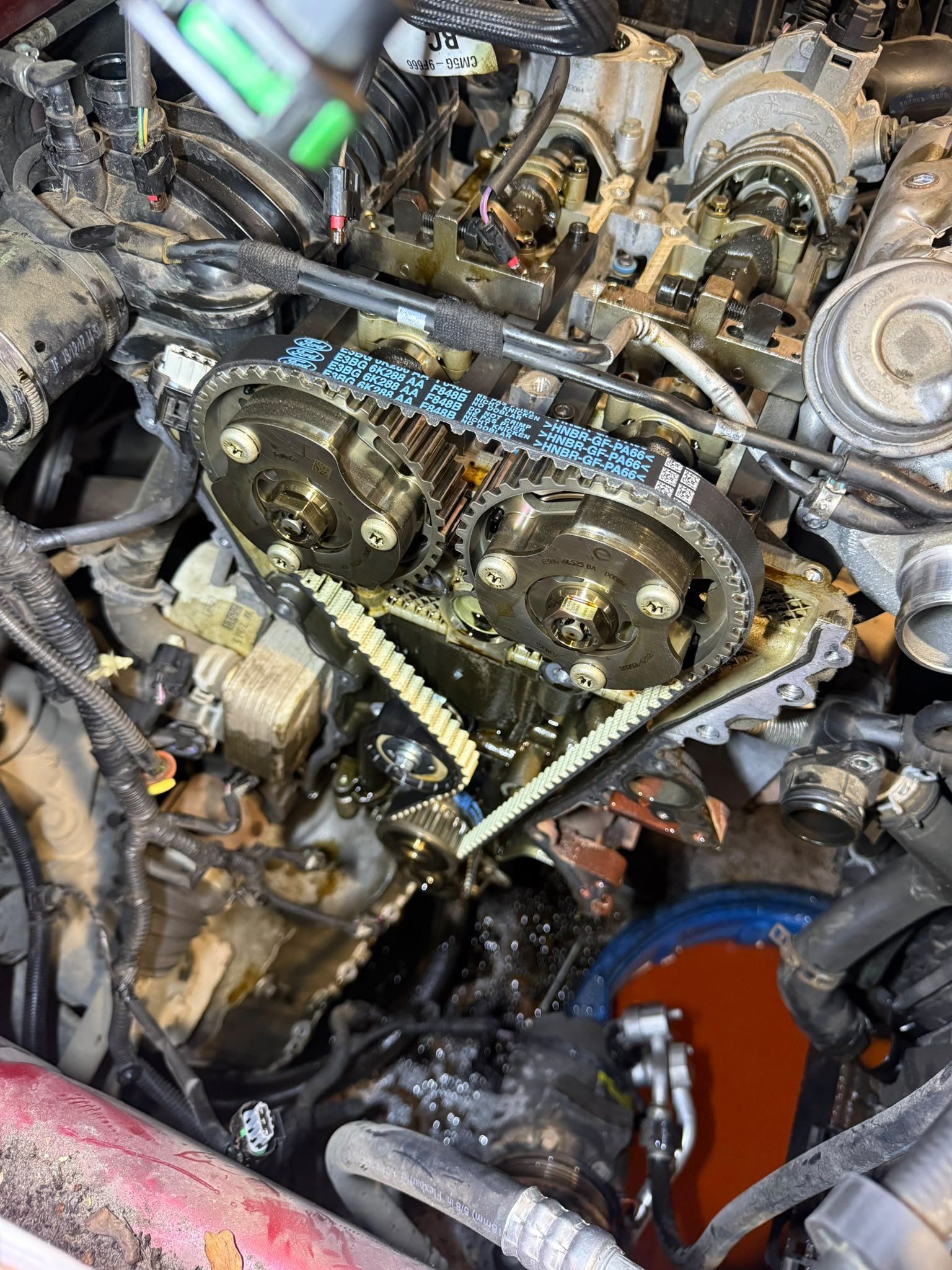
The 1.0 EcoBoost is Ford’s three-cylinder turbo petrol engine. Its camshafts are driven by a toothed rubber belt, like most cambelts, but instead of sitting dry behind a plastic cover the belt runs inside the engine and is bathed in engine oil. Ford chose this because an oil-bathed belt runs quietly with little friction, which helps economy. The oil pump on this engine is driven by a second, smaller belt that also runs in oil.
The design works well while the oil is right and the belt is within its life. It is less forgiving than a dry belt when either of those slips.
Why the belt wears out
The belt material is made to live in one kind of oil. For most 1.0 EcoBoost engines Ford specifies a 5W-20 oil meeting its own WSS-M2C948-B standard, and the handbook gives the exact specification for your car. Three things shorten the belt’s life:
- The wrong oil. An oil that does not meet Ford’s specification can attack the belt, so it swells, softens and starts to shed material.
- Short journeys. An engine that rarely gets fully warm collects moisture and fuel in its oil, which then ages faster. Old, contaminated oil is hard on the belt.
- Time and missed services. The belt ages with the years as well as the miles, and oil left in too long makes it worse.
What goes wrong when it fails
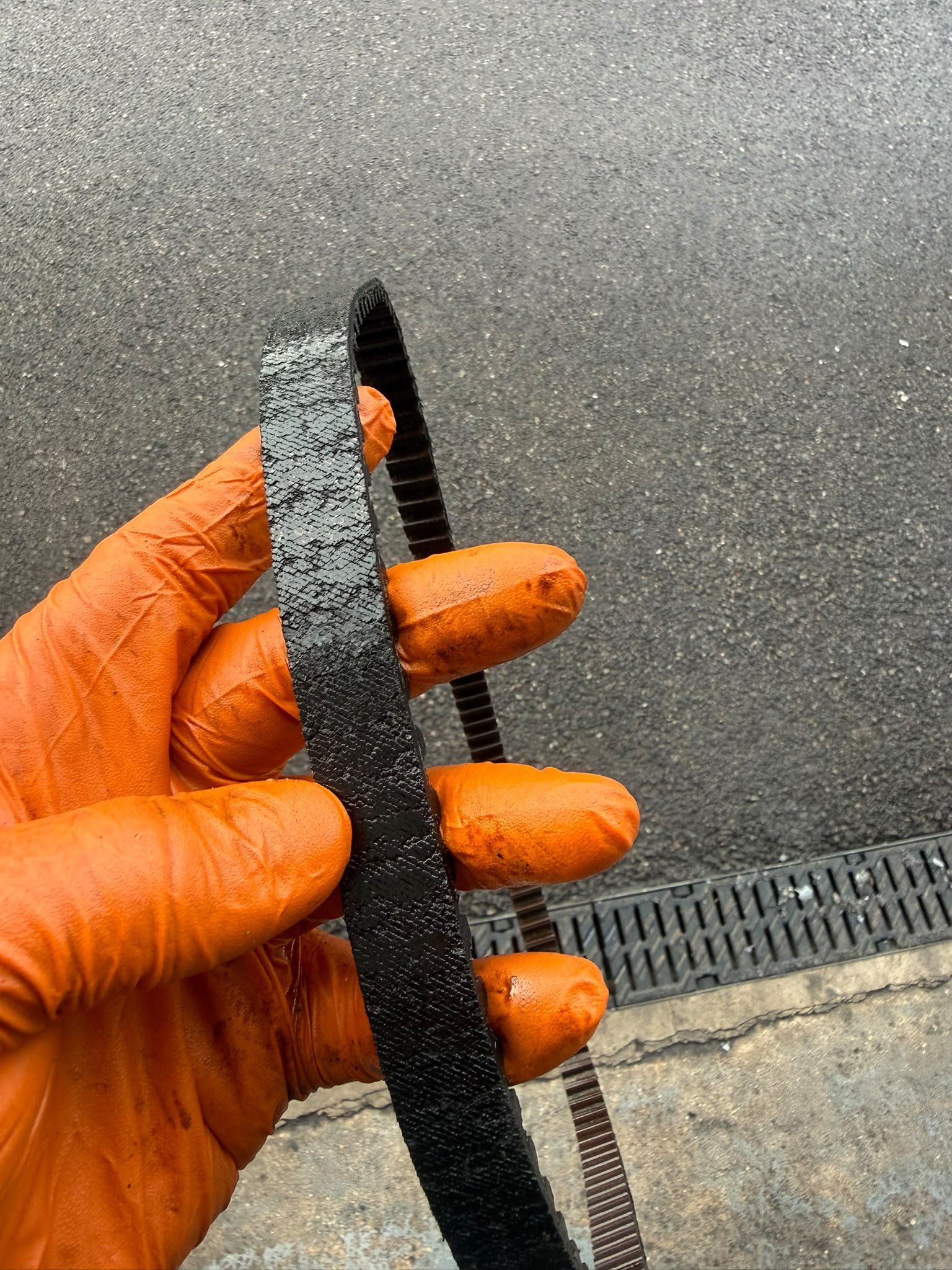
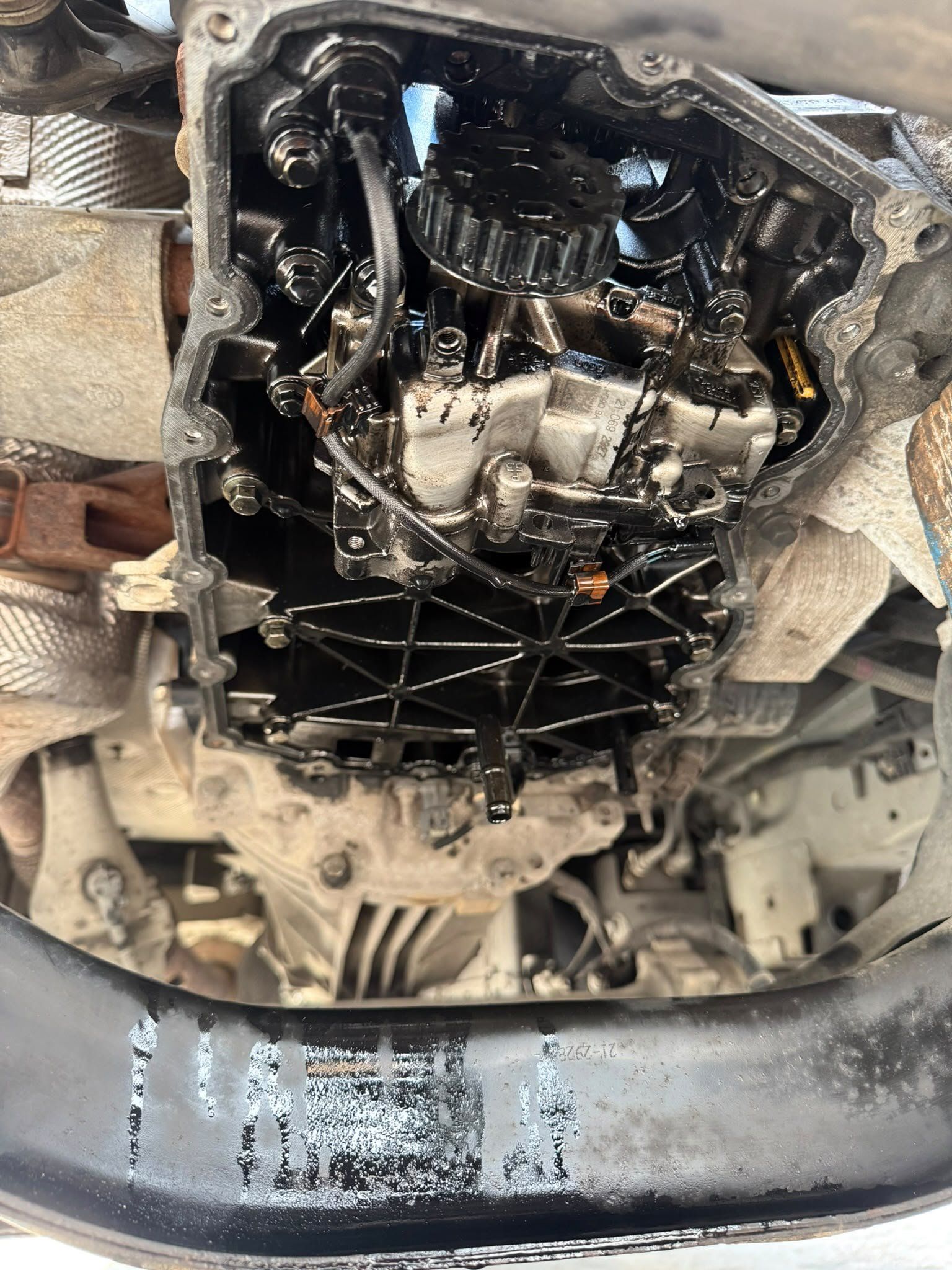
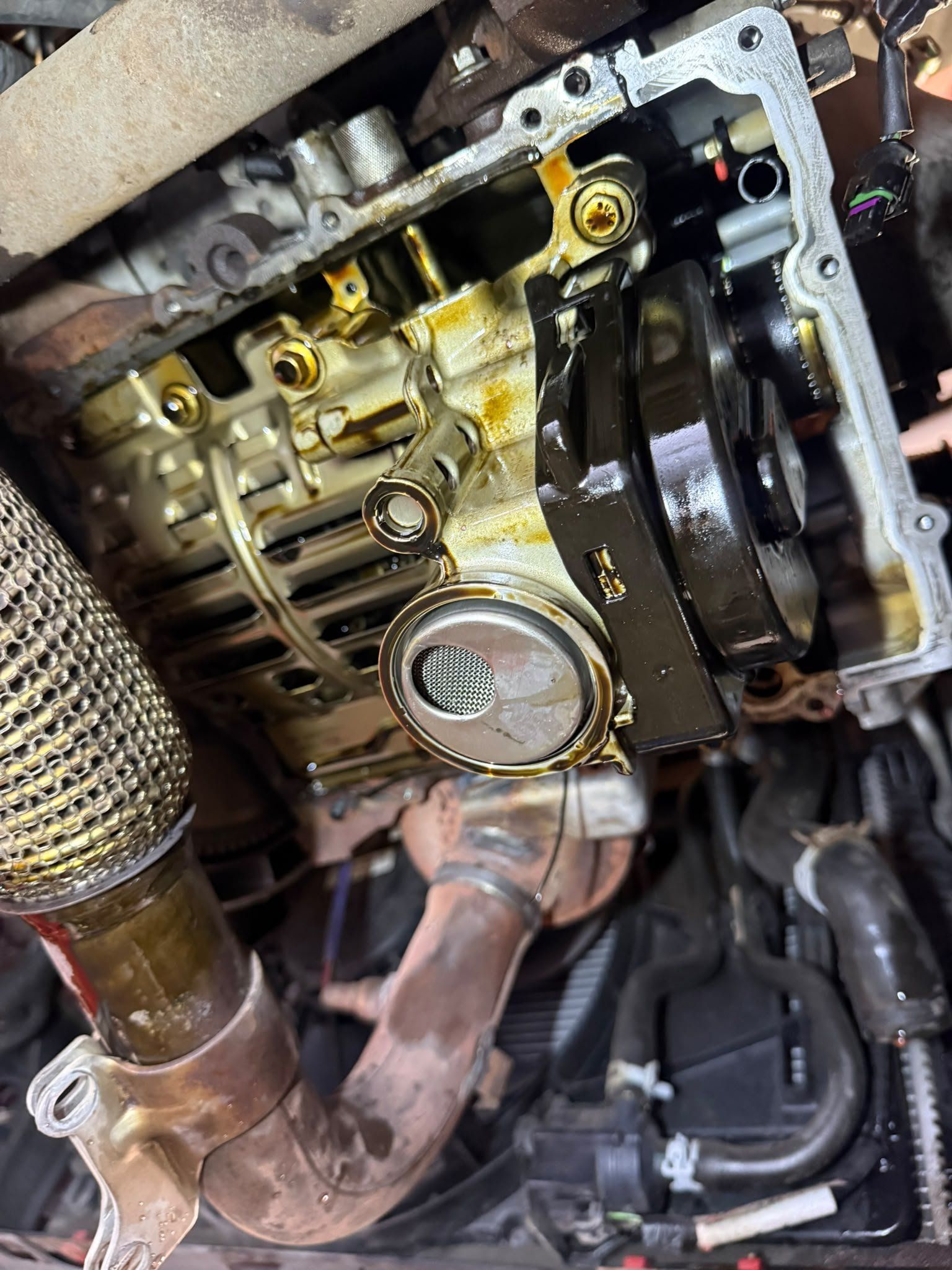
A worn wet belt rarely snaps without warning. More often it breaks up gradually: the edges fray and fragments of belt material come away into the oil. The oil carries them down to the sump, where the oil pump draws its supply through a pickup and a fine strainer. The fragments collect there.
As the strainer blocks, the pump can no longer draw enough oil, and oil pressure falls, first at idle and then under load. An engine short of oil pressure damages its bearings and turbocharger quickly. A belt that does let go, or jumps a tooth, upsets the valve timing and can do serious damage of its own.
Why the strainer is changed
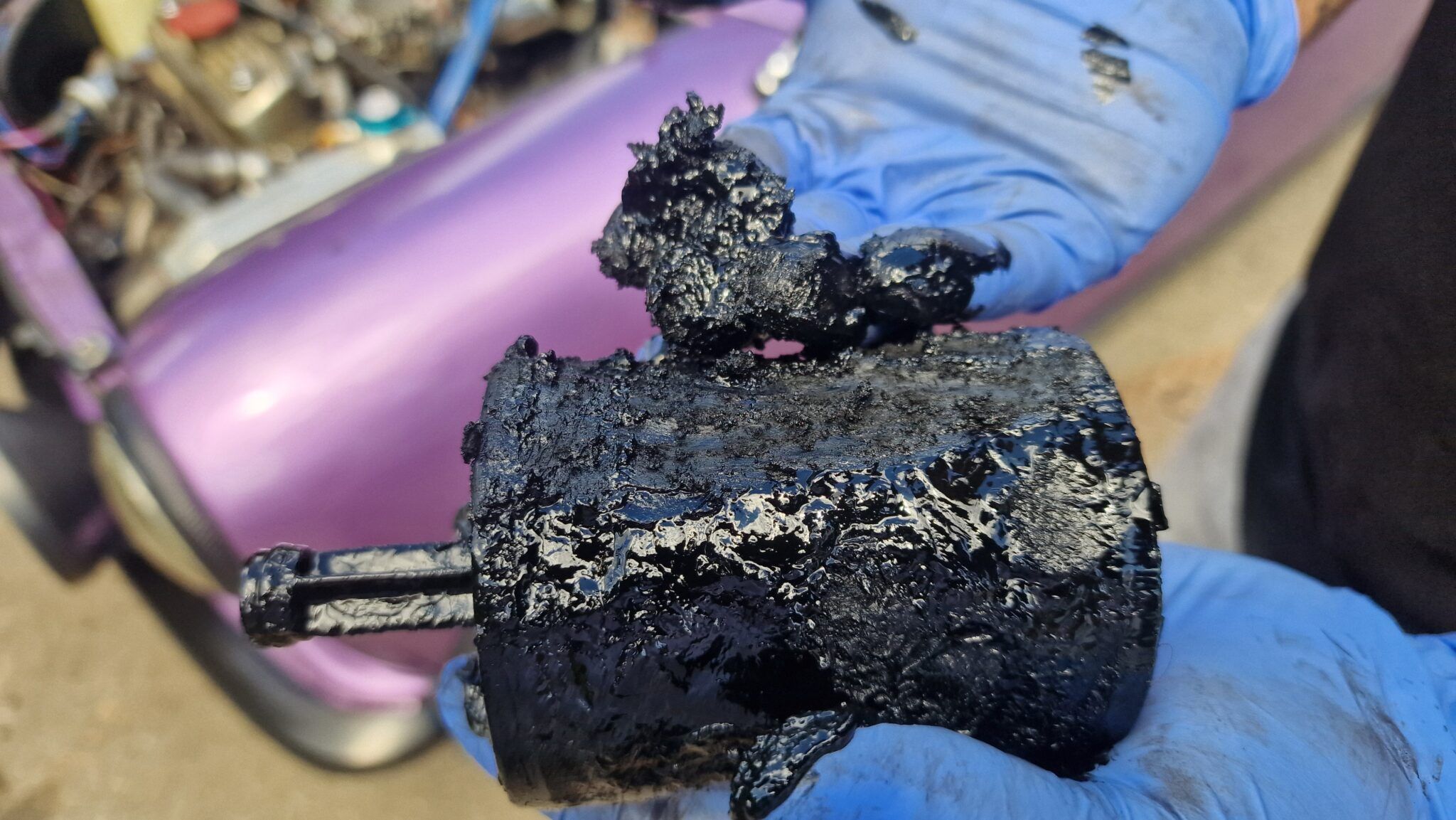
The oil filter in the photo near the top of this page is clogged with black sludge from a failed wet belt. The same debris reaches the oil pickup strainer in the sump, and it does not drain out with the old oil. A new belt fitted over it leaves the restriction where it was.
That is why at SOMA Autos the oil strainer is replaced as standard on every EcoBoost wet belt job, and why the change is part of the job rather than offered as an extra. The pickup sits inside the sump, so the sump has to come off to reach it.
Warning signs
Many cars give little warning before the oil light, which is why the belt is best changed on time rather than on symptoms. Signs that something is already wrong:
- the oil pressure warning light coming on, even briefly at idle
- a rattle or tapping from the engine that was not there before
- rough running, misfires or a loss of power, often with the engine management light
- difficult starting
If the oil pressure light comes on while you are driving, stop as soon as it is safe and switch the engine off. Driving on without oil pressure is how a belt job turns into a replacement engine.
Which Fords have the 1.0 EcoBoost
The 1.0 EcoBoost went into a long list of Ford models: the Fiesta, Focus, EcoSport, B-Max, C-Max and Grand C-Max, and the Transit Connect and Transit Courier with the 1.0 petrol engine. The Puma and the later mild-hybrid versions use a revised engine with a timing chain for the camshafts.
Ford revised the engine more than once, and later versions changed how the camshafts and the oil pump are driven, so the model and year alone do not settle whether your car has the belt. The quickest answer is to send the registration on WhatsApp to 07578 178468 and ask.
When to have it changed
Ford originally gave the 1.0 EcoBoost belt an interval of 10 years or 150,000 miles. In 2026 it cut the timing belt and oil pump belt interval on these engines to 6 years or 100,000 miles, whichever comes first, so a car serviced to the old schedule may already be due. Treat it as the latest point, not a target: a car that does mostly short trips, has missed oil changes, or has had oil of unknown specification is a candidate for doing it sooner. On a car with an unknown history, changing the belt and the strainer settles the question.
Is it worth doing on an older car?
Usually, yes. Set the price of the job against what a seized or starved engine costs to replace, and the belt is the cheaper of the two by a wide margin, especially on a car that is otherwise sound.
Getting a quote
The price depends on the car, and the oil strainer change is always part of the job. Ford Transit wet belts have their own page. For a quote on your car, call or send a WhatsApp to 07578 178468 with the registration.
Coming from further away
The workshop is in Sarratt, near Rickmansworth, a short drive from Chorleywood, Croxley Green, Kings Langley and Watford. Call or send a WhatsApp to book a time before you bring the car in.