Brakes wear by design: every stop turns a little of the pads and discs into dust. The job is to replace them before they wear past the point where they work properly, and to deal with the faults that make a brake drag, pull or feel soft. At SOMA Autos that covers pads, discs, calipers and brake fluid.
What is replaced
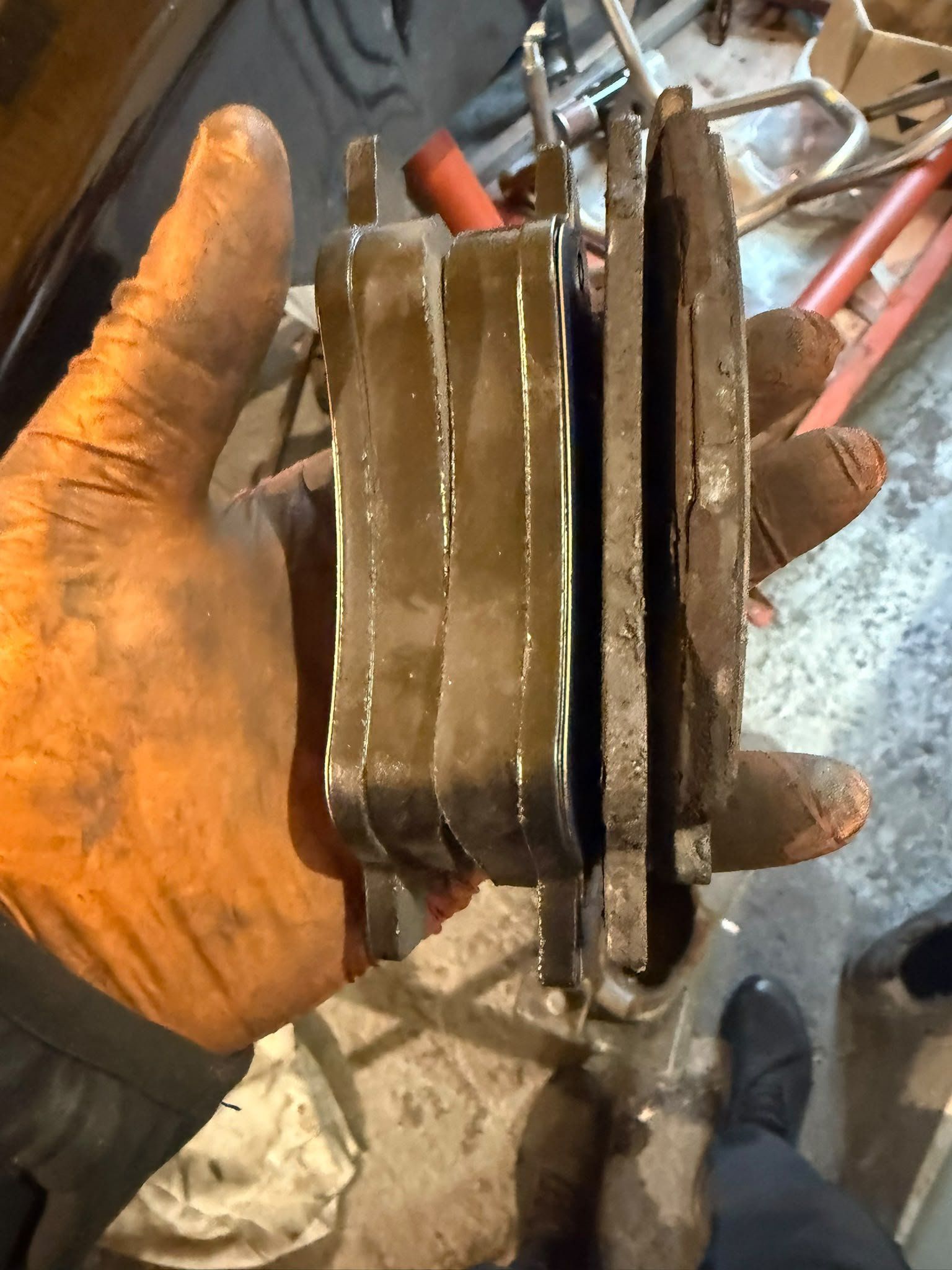
- Brake pads. The friction material that presses on the disc. Pads are always replaced in sets, both sides of an axle at once, so the car brakes evenly.
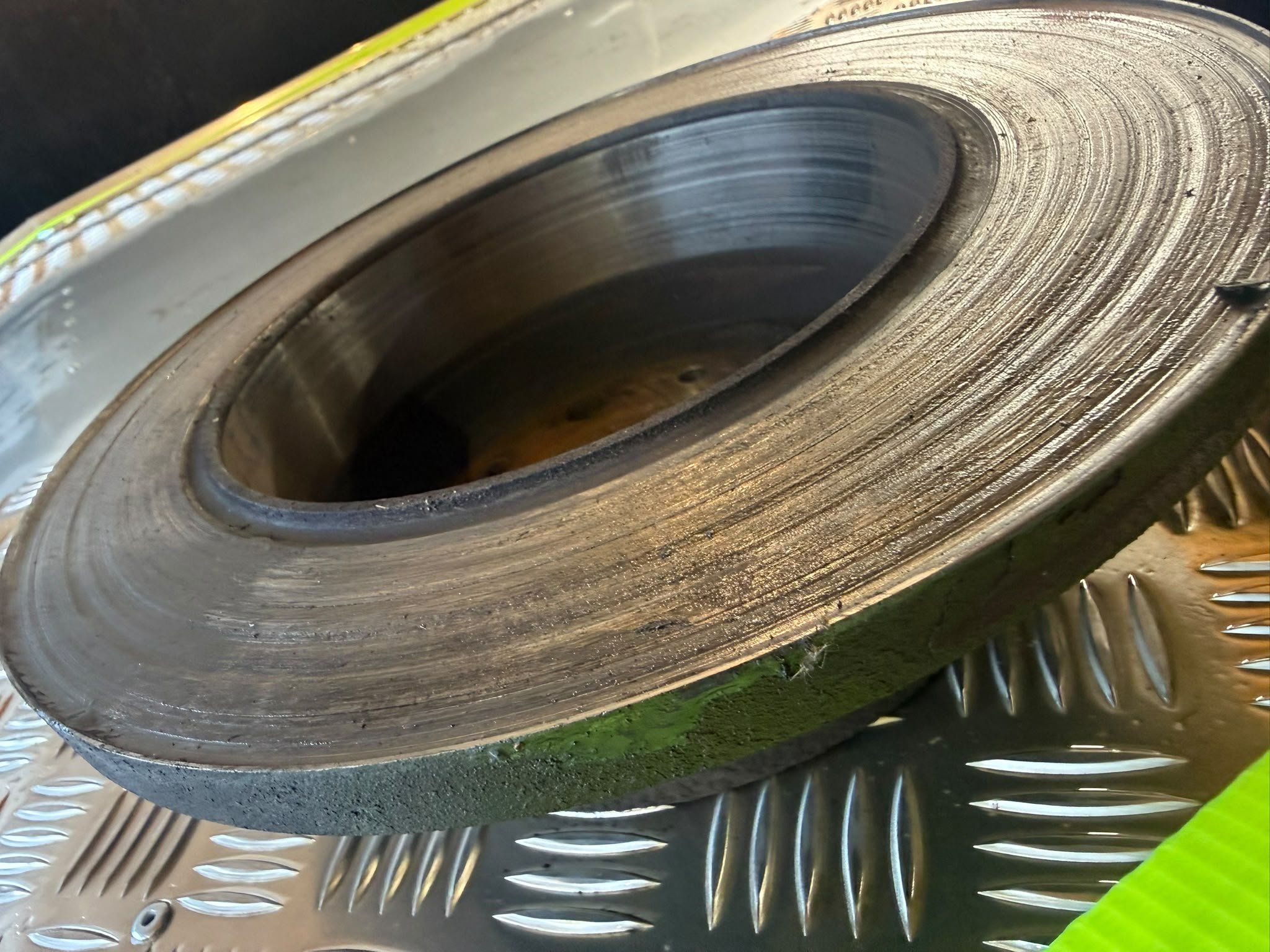
- Brake discs. The metal discs the pads grip. Every disc has a minimum thickness set by the manufacturer, and below it the disc cannot shed heat properly. Discs are replaced in pairs, normally with new pads.
- Calipers. The hydraulic clamp that pushes the pads onto the disc. A caliper whose piston or slide pins have seized keeps the pads dragging, or stops them working fully.
- Brake fluid. The fluid that carries the pedal pressure to each wheel, covered below.
On cars with an electronic parking brake, the rear calipers have to be put into a service mode with a diagnostic tool before the pads can be changed. It is a routine step, but it is why a rear brake job on a modern car is not just a set of spanners.
Warning signs
Brakes rarely fail without warning. These are the signs to act on:
- Squealing when you brake. Some pads have a small metal tab that squeals against the disc when the pad is nearly worn out. Others have an electronic sensor and light a warning on the dashboard.
- Grinding or a harsh metal noise. The pad material may be gone, and the backing plate is cutting into the disc. Stop driving the car and have it looked at.
- Judder through the pedal or the steering wheel when you slow down, usually from discs that have worn unevenly or run out of true.
- Pulling to one side under braking, often a sticking caliper, a collapsed hose, or pads worn or contaminated on one side.
- A soft or spongy pedal, or one that travels further than it used to. That can mean air or moisture in the fluid, or a leak. Have it checked before you drive far.
- A burning smell after a drive, or one wheel much hotter than the others, which points to a brake that is not releasing.
- The brake warning light on the dashboard. Depending on the car it can mean low fluid, worn pads or a fault in the system.
Brake fluid is changed by time, not miles
Brake fluid absorbs moisture from the air, through the hoses and the reservoir cap, even when the car is parked. Water in the fluid lowers its boiling point. Under hard or long braking, down a long hill or with a loaded car, the fluid near the calipers can boil, and boiling fluid makes the pedal go soft just when you need it. The moisture also corrodes the system from the inside.
That is why many manufacturers give a time interval, commonly every two years, whatever the mileage. Your service book has the figure for your car, and the new fluid should be the type the manufacturer specifies. A brake fluid change is often done with a service.
How long pads and discs last
There is no single mileage. Pads on a heavy car driven around town and on hills can be worn out in a fraction of the miles that the same pads last on a car used mostly on the motorway. The front brakes do most of the work, so the front pads usually wear out first.
Discs usually last longer than pads, often through two sets, but that depends on the car and the discs. The way to know is to measure: pad thickness and disc thickness are checked against the manufacturer’s limits, and the result tells you how much life is left.
Quotes and parts
Brake work is quoted for your car, front axle, rear axle or both. Call or send a WhatsApp to 07578 178468 with the registration and say what you have noticed; a photo of the wheel through the spokes often helps.
Brakes and the MOT
Brake performance and condition are part of every MOT, and brake defects are one of the common reasons for failing. If a test has already failed the car on brakes, bring the failure sheet. See MOTs.
A car that pulls or judders under braking is not always a brake fault. Worn suspension and steering parts and uneven tyres can do the same, so it is worth reading suspension and tyres too.
Booking
The workshop is in Sarratt, near Rickmansworth, a short drive from Chorleywood, Croxley Green, Kings Langley and Watford. It is open Monday to Friday, 8am to 5pm, with Saturdays by appointment. Call or send a WhatsApp to 07578 178468 to book a brake check.