The suspension holds the tyres on the road and the steering points them where you want to go. Both wear gradually, so a car can feel fine to the person who drives it every day and still have worn parts. This page covers what gets replaced, what the common symptoms mean, and why the job starts on the ramp.
What gets replaced
Most suspension repair comes down to a small set of parts that wear with miles, potholes and age:
- Coil springs. They carry the weight of the car. They can sag over time, and they can snap, most often a short piece at the bottom coil.
- Shock absorbers (dampers). They stop the car bouncing after a bump. A worn one leaks oil or simply stops damping, and the car floats, wallows or bottoms out.
- Bushes. Rubber mountings where the suspension arms bolt to the body. When they split or perish, the arm moves where it should not and the car knocks or wanders.
- Drop links. Short links between the anti-roll bar and the suspension. They are one of the most common sources of a knock over small bumps.
- Ball joints and top mounts. The pivots the wheel turns on, and the mount at the top of each strut.
- Steering components. Track rod ends, inner track rods, steering rack gaiters and the rack itself.
Symptoms and what they usually mean
- A knock or clunk over bumps: drop links, bushes, top mounts, ball joints, or a broken spring.
- A clunk when turning: top mount bearings or ball joints; a click on full lock while pulling away is often a CV joint on the driveshaft rather than the suspension.
- Pulling to one side: tyre pressures, wheel alignment, a worn joint or bush, or a sticking brake.
- Uneven tyre wear, especially on the inner or outer edge: alignment that is out, often because something in the suspension or steering is worn.
- A car that sits lower on one corner: usually a broken or sagging spring.
- Bouncing or wallowing after a bump, or a nose that dives hard under braking: worn shock absorbers.
- Vague or wandering steering, or a knock through the steering wheel: worn track rod ends or steering joints.
None of these is a diagnosis on its own. Two different worn parts can make the same noise, which is why replacing parts on a guess wastes money.
Diagnosis on the ramp
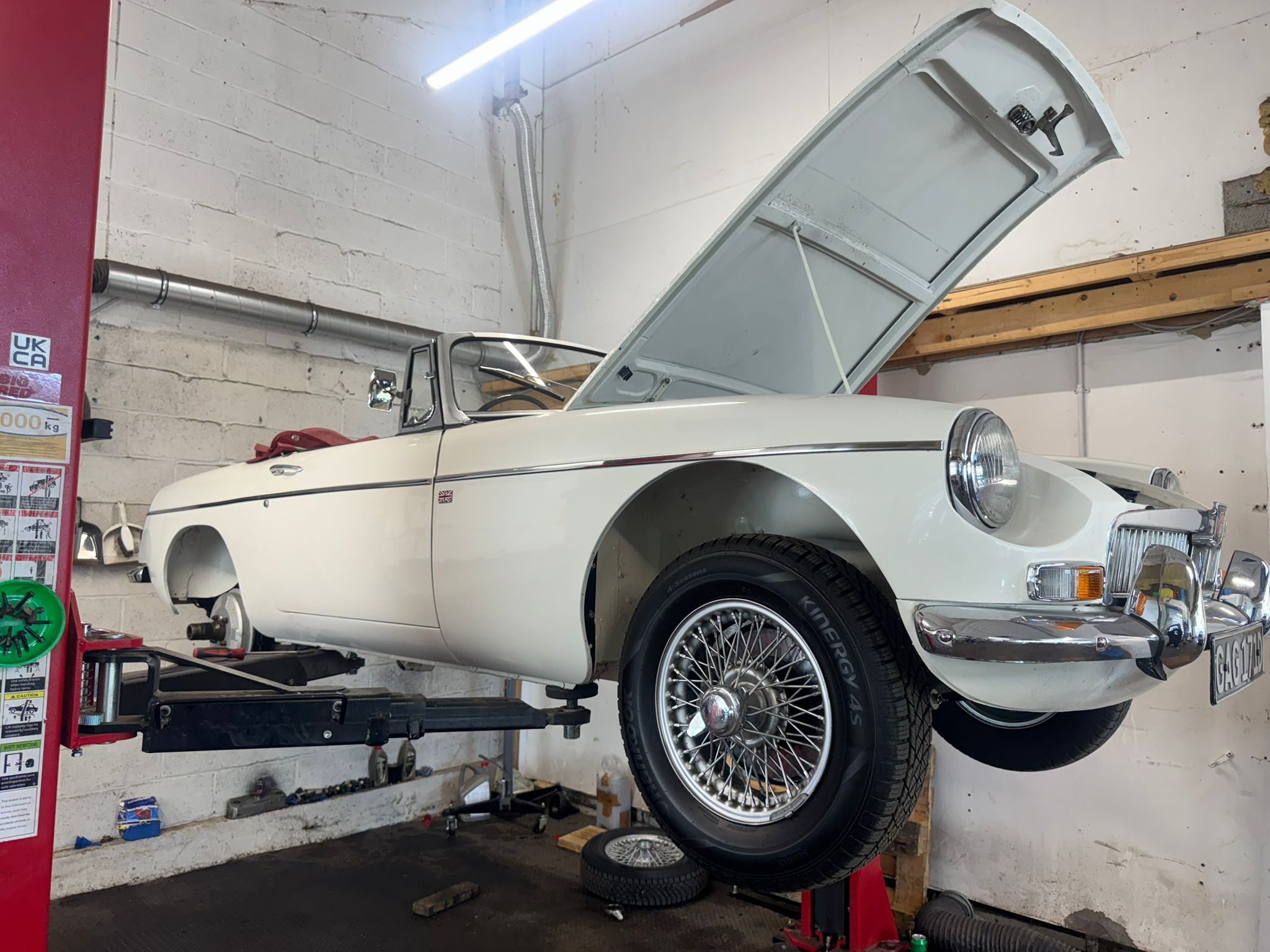
A worn joint often feels tight with the car standing on its wheels, because the weight of the car holds it in place. With the car raised, the wheels can be rocked and levered and each joint checked for play, the bushes looked at for splits, the springs checked coil by coil and the shock absorbers checked for leaks. That is why suspension work starts with the car in the air rather than with a test drive alone.
The workshop in Sarratt has ramps, so the car goes up and the worn part is found rather than guessed at. If the noise only shows on the road, a short drive with you in the car to point it out helps.
Brakes and tyres are in the same place
With the wheels off for suspension work, the brakes and tyres are right there. A worn pad, a scored disc or a tyre worn on its edge shows up at the same time, and it is often the tyre wear that gives away the suspension fault in the first place. See brakes and tyres.
After the work: alignment
Changing a track rod end, a steering rack or some suspension arms disturbs the wheel alignment, the angles that make the wheels point straight. Alignment that is out wears the tyres on one edge and can make the car pull, so it should be checked after that kind of work. Ask about it when you book.
Suspension and the MOT
Suspension and steering are checked on every MOT. A broken spring, a shock absorber leaking badly, excessive play in a joint and a split steering rack gaiter are all common reasons for a fail. If your MOT is coming up and the car has started knocking, have it looked at first. See the MOT page.
Booking
Call or send a WhatsApp to 07578 178468 with the registration and a description of the noise or the symptom: when it happens, which corner it seems to come from, and whether it changes with speed or steering. That is enough to book the car in for a look.