A gearbox fault rarely fixes itself, and it rarely stays small. A whine becomes a growl, a crunch into one gear spreads to others, a small leak runs the box low on oil. Caught early, many gearbox faults are a repair rather than a replacement. SOMA Autos is a workshop in Sarratt run by Alex, not a booking network: when you call, you are talking to the garage that does the work.
Diagnosis first
The first job is to find out what is actually wrong, and whether it is the gearbox at all. Clutches, driveshafts, wheel bearings and engine mounts can all produce noises and vibrations that sound like gearbox trouble. Replacing a gearbox to cure a worn release bearing is an expensive mistake. Common gearbox symptoms, and what they tend to point to:
- Whining or growling that rises and falls with road speed, often worse in particular gears: worn bearings or gears
- Crunching or grinding going into a gear, especially second or third on a quick change: worn synchromesh
- Jumping out of gear under load or on the overrun: worn selector parts, detents or gear teeth, or tired gearbox mounts
- Stiff or vague gear selection: often the linkage or cables rather than the gearbox itself, which is a much smaller job
- Oil leaks from the driveshaft seals, input shaft seal or casing joints, which left alone can run the gearbox dry
A road test, a check of the oil level and condition, and an inspection on the ramp usually narrow it down. Sometimes the answer is a seal, a linkage adjustment or the right oil rather than a rebuild.
Is it the clutch or the gearbox?
The two sit next to each other and share symptoms. A noise that changes when you press the clutch pedal usually points to the clutch or release bearing; a noise that follows road speed in certain gears usually points to the gearbox. Slipping and a high biting point are clutch faults. If it turns out to be the clutch, see clutch replacement.
Rebuild, repair or replace
Once the fault is known, there are usually three ways forward:
- Repair the part that has failed: a seal, a linkage or a mount. This is the quickest and cheapest when the fault is outside the gearbox internals.
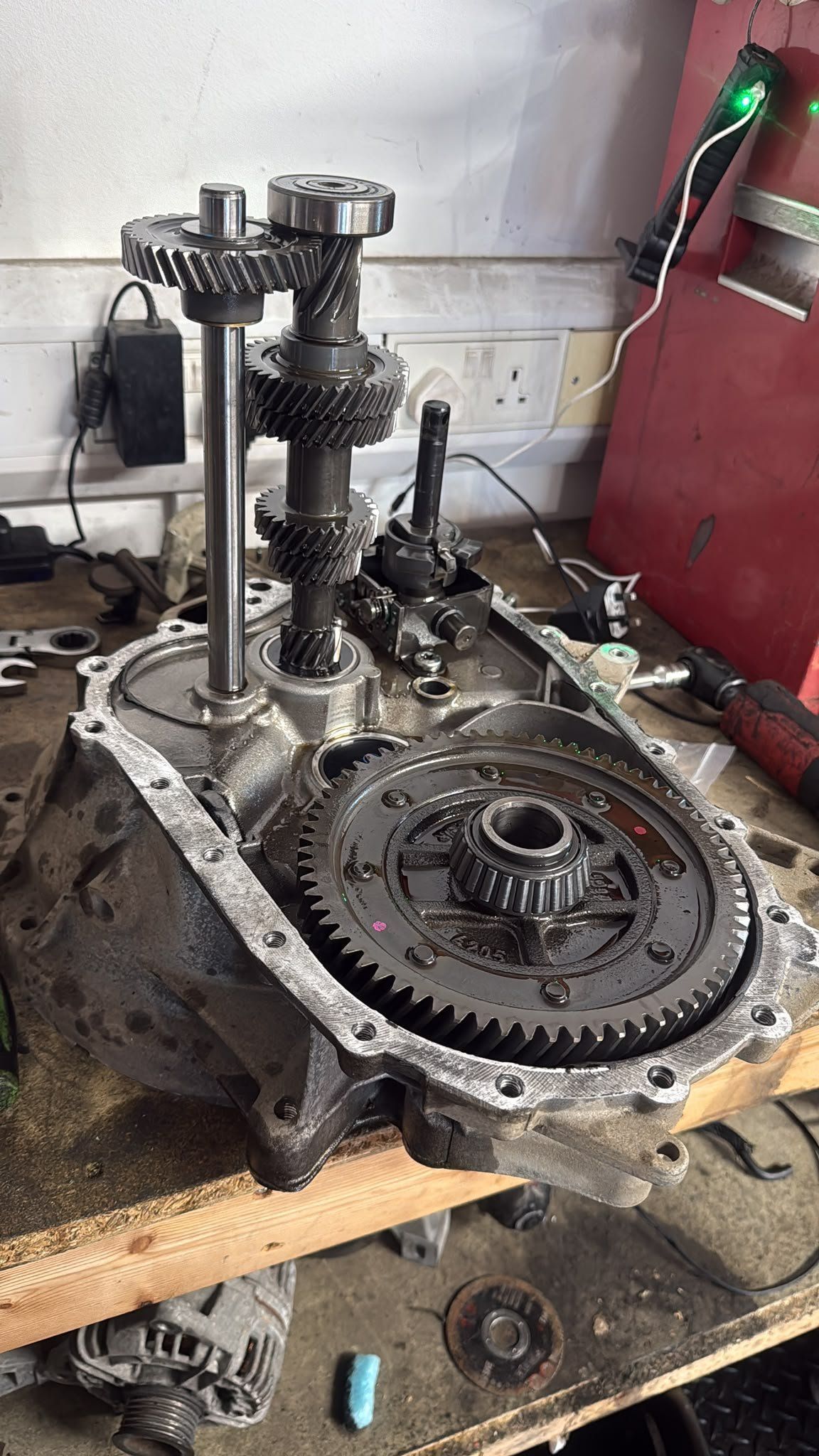
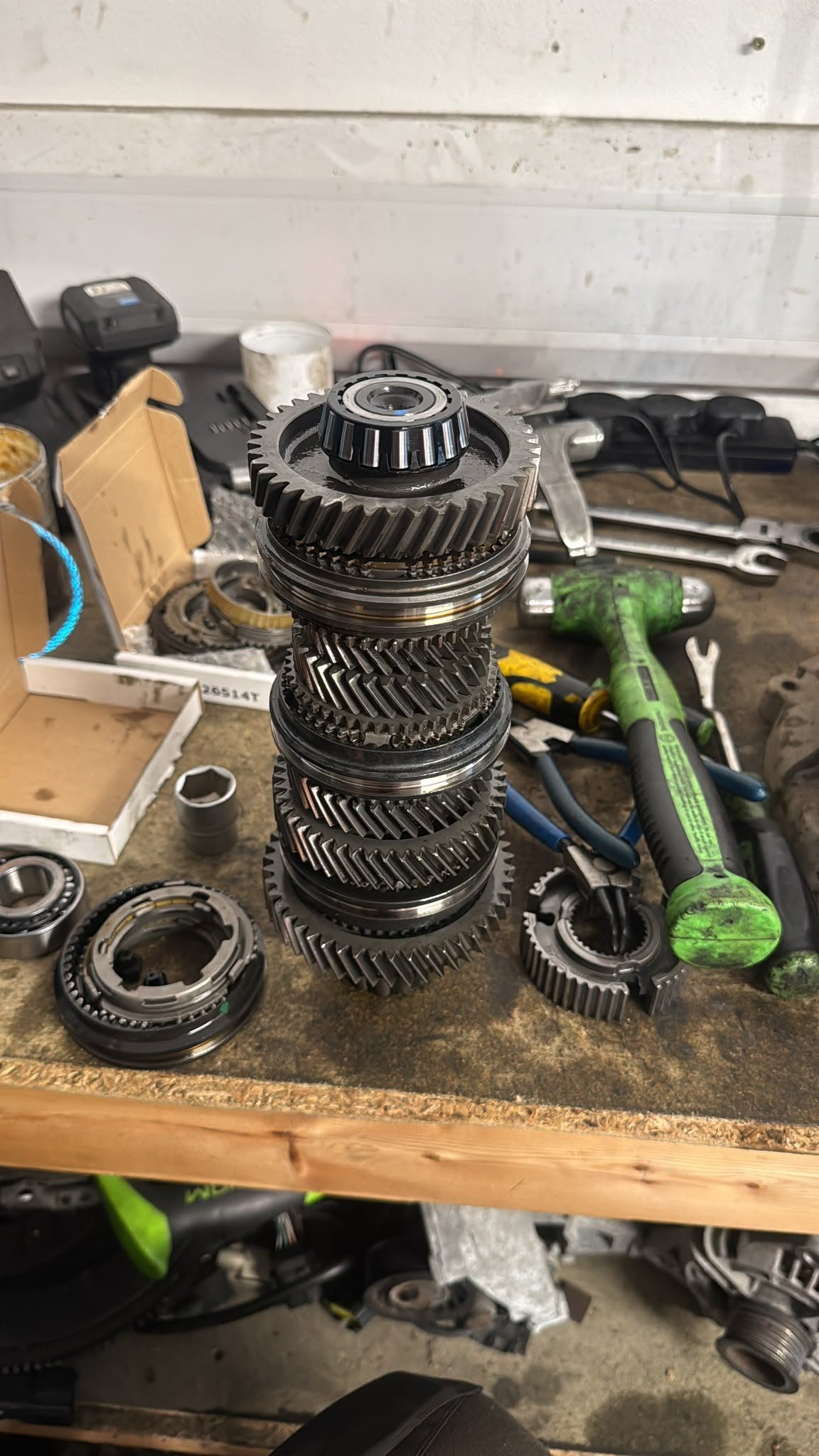
- Rebuild the gearbox: it comes out of the car and is stripped, and the worn bearings, synchromesh rings, seals and any damaged gears or selector parts are replaced before it is reassembled and refilled. You keep the gearbox the car came with, and you know what has been done to it.
- Replace it with another unit, new, reconditioned or used. A used gearbox is often the cheapest option on paper, but its history is unknown, and on some cars a suitable unit is hard to find.
Which makes sense depends on the car, what has failed inside the gearbox, and what the car is worth to you. A rebuild usually takes longer than fitting a replacement unit, because the box has to be stripped and parts ordered for it. Alex will talk you through the options once the fault is known, so you can decide.
Why the gearbox oil matters
Gearbox oil is often described as filled for life, but it still ages, and a gearbox that has lost oil through a leaking seal wears quickly. Using the oil the manufacturer specifies matters too: the wrong oil can affect how the synchromesh works and make gear changes notchy. If your gearbox has started to leak, have it looked at before the level drops far enough to do damage.
Classic gearboxes
Older cars have simpler gearboxes, but parts can be harder to find and the oil they were designed for is different from modern oils. Alex looks after several classic vehicles; for the rest of what SOMA does for older cars, see classic car repairs.
Book a diagnosis
Call or send a WhatsApp to 07578 178468 with the registration and a description of what the gearbox is doing: which gears, when it happens, and whether it changes with the clutch pedal. Alex has 15 years in the business, with spells at Aston Martin, Jaguar Land Rover and Ford.
The workshop is in Sarratt, Hertfordshire, near Rickmansworth, a short drive from Chorleywood, Croxley Green, Kings Langley, Chipperfield and Watford.