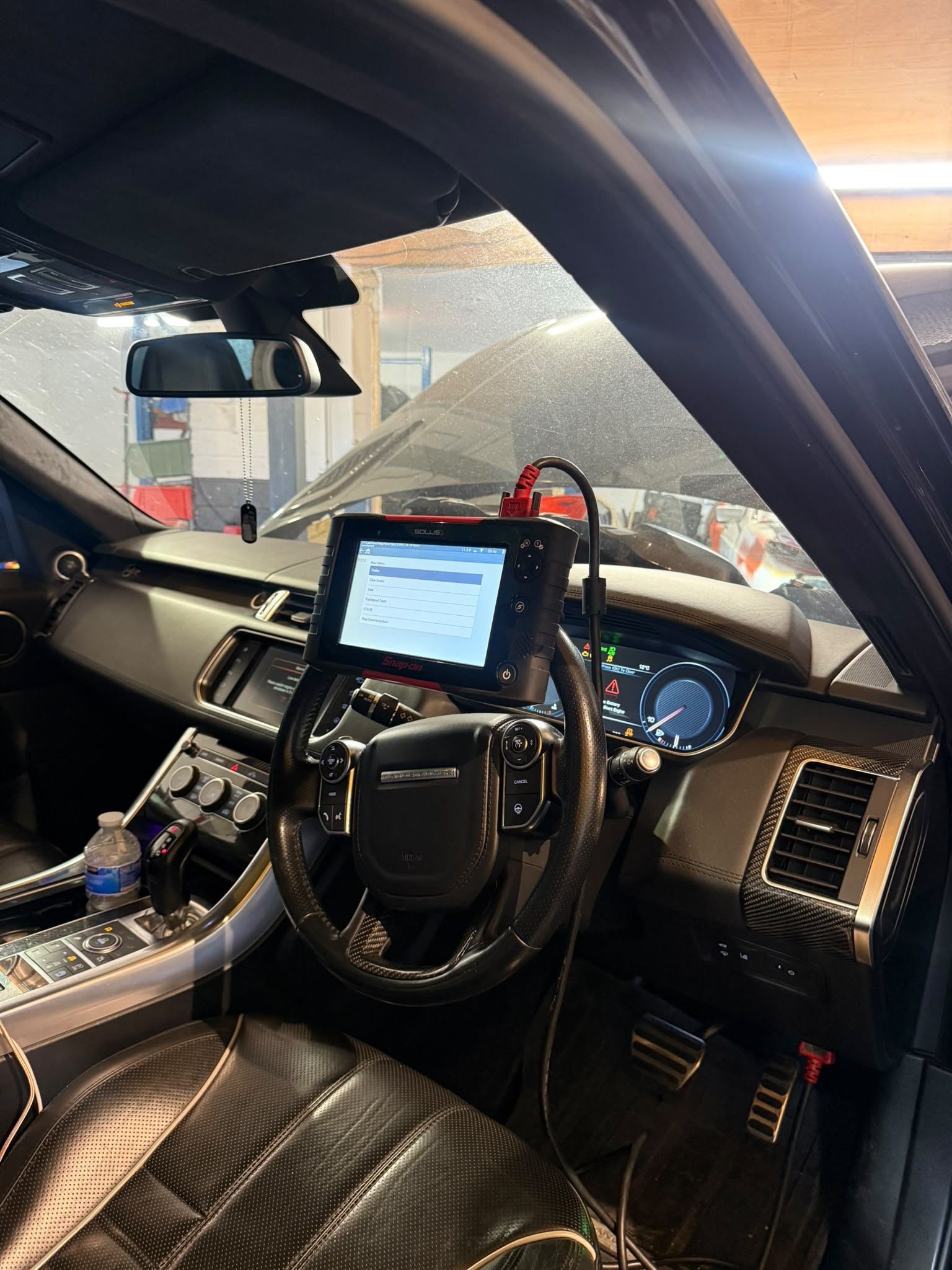
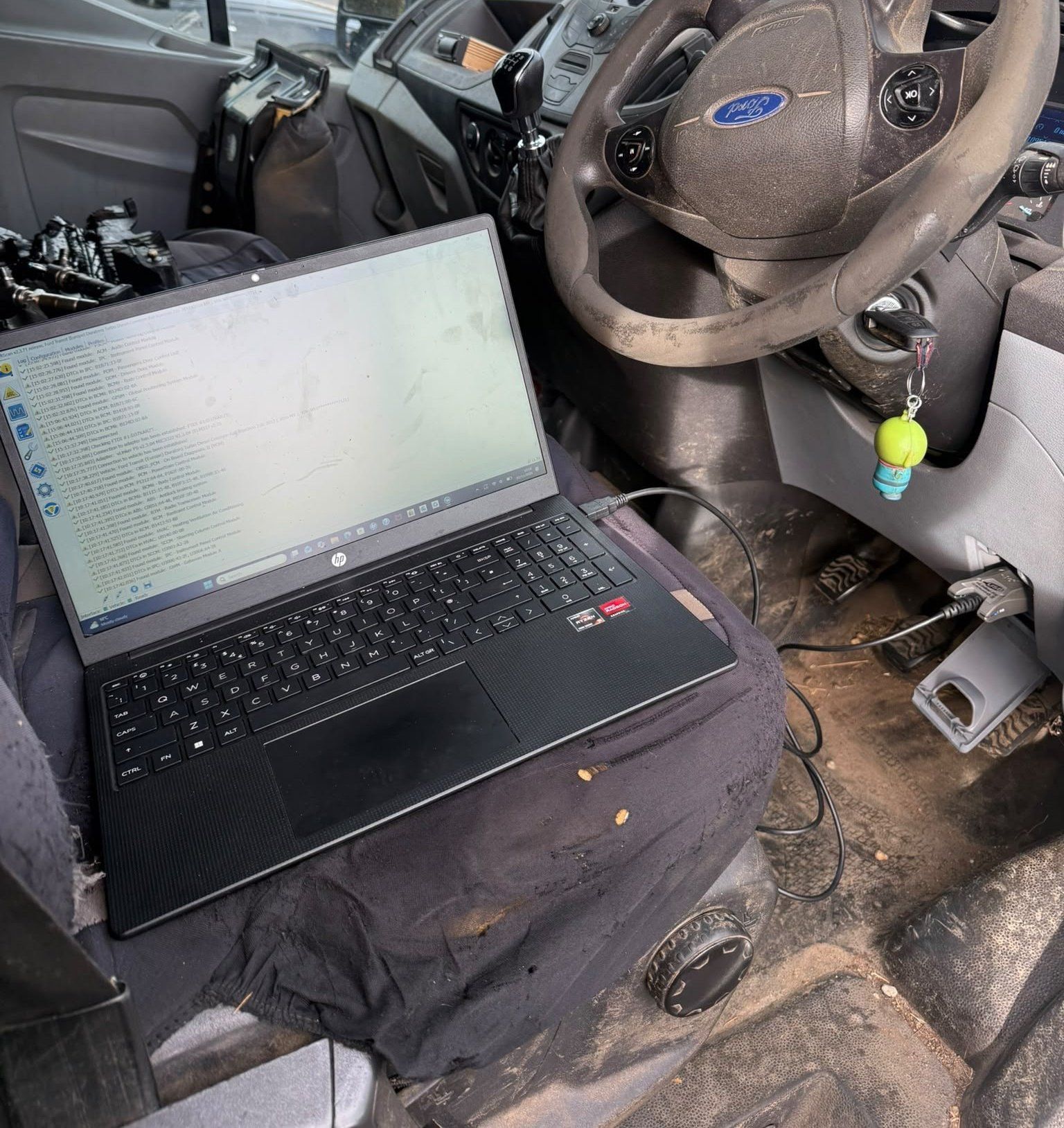
A warning light tells you that a control unit has seen something it does not like. It does not tell you what has failed. Modern cars log fault codes in every system, from the engine and gearbox to the brakes and airbags, and reading those codes is quick. Working out why the code is there is the part that takes skill, and it is the part that decides whether the repair fixes the car.
Fault finding, not part swapping
A fault code names a symptom. A code for a lean mixture can come from an air leak, a weak fuel pump, a dirty air flow sensor or a split intake hose. A misfire code can be a spark plug, a coil, an injector or low compression. Fitting the part named in the code description and hoping is how a small fault becomes an expensive one.
Good fault finding runs in order:
- Read the codes, along with the freeze-frame data saved at the moment the fault appeared.
- Look at the live data: sensor readings, fuel trims, temperatures and pressures, with the engine running and, where it helps, on the road.
- Test the suspect parts and wiring to prove which one has failed before anything is replaced.
- Repair and check: clear the codes, run the car and confirm the fault does not come back.
Alex trained through a Bosch advanced apprenticeship, finishing in 2016, and has worked at Aston Martin, Jaguar Land Rover and Ford. That spread covers everyday cars and prestige cars alike.
Common warning lights
Engine management light
The amber engine symbol. It covers anything that affects the engine’s running or emissions: misfires, sensor faults, air leaks, exhaust gas recirculation and fuel problems. Steady means get it checked soon; flashing means a serious misfire, so ease off and get it looked at before driving any distance.
Oil pressure light
The red oil can. This one means stop: the engine is not getting enough oil pressure, and running on can damage the bearings and turbo within minutes. Check the oil level once the engine is off. On the Ford 1.0 EcoBoost, falling oil pressure is a known sign of a wet belt breaking up and blocking the oil pickup strainer, so if your car has that engine, read the wet belt replacement page.
ABS and traction control lights
Often a wheel speed sensor, its wiring or the toothed ring it reads. The ordinary brakes still work with the ABS light on, but the anti-lock and stability systems may not, so have it checked.
Glow plug light on a diesel
The coil symbol on a diesel normally comes on briefly at start-up. If it flashes or stays on while driving, the engine has logged a fault, and not always a glow plug fault: on many diesels the same light warns of other engine problems too.
Repairs, cost-effective
Once the cause is known, the repair is usually the straightforward part. The aim is a repair that fixes the fault for the right cost: the failed part, not a set of parts around it. For a larger job, ask for a quote before it goes ahead. Diagnosis often leads to work covered on other pages, such as clutch replacement or a gearbox rebuild.
Motorbike faults
Motorbikes get the same approach. Typical motorbike faults include charging problems (a failed regulator rectifier or stator leaves a flat battery), poor earths and corroded connectors, starting faults, and bikes that run roughly or cut out. See motorbike servicing and repairs.
What to tell us when you book
Call or send a WhatsApp to 07578 178468 with the registration and what the car is doing: which light came on, when it happens (cold, warm, at speed, under load), any noise or smell, and whether anything was worked on recently. A photo of the dashboard with the light on helps.